Choosing the Right Foundation Type for Your Soil
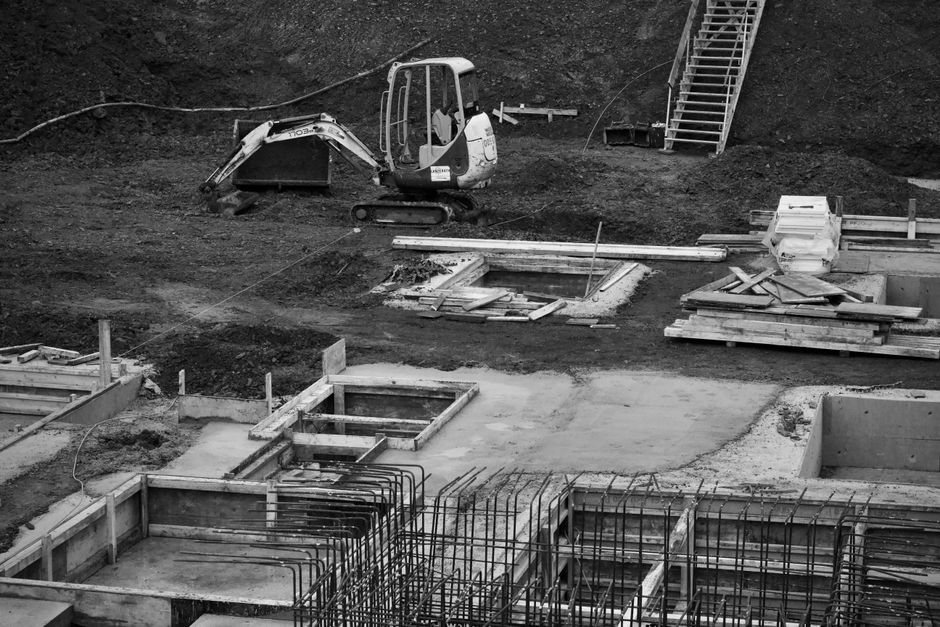
The selection of a foundation type is a critical step in the construction process, as it directly influences the long-term stability and performance of a structure. Foundations must be designed to safely transfer building loads to the ground, and the soil beneath a site plays a central role in determining which approach is suitable. Different soil conditions—ranging from dense sand and gravel to soft clay or loose fill—require specific foundation strategies to accommodate their bearing capacity, settlement characteristics, and moisture sensitivity.
Engineers and builders typically classify foundations into several broad categories: shallow foundations, deep foundations, and raft foundations. Each of these systems has distinct mechanisms for load distribution and is suited to particular soil profiles. A thorough geotechnical investigation, including soil borings and laboratory testing, provides the data needed to match a foundation type with the ground conditions. This article explores the key characteristics of each foundation type and the soil contexts in which they are commonly considered.
It is important to note that foundation selection depends on many interdependent variables. The information presented here outlines general principles and processes, but every project requires a site-specific evaluation by qualified professionals. No foundation system can guarantee performance without careful design and quality construction, and outcomes are always subject to local conditions and execution.
Understanding Soil Types and Their Characteristics
The behavior of soil under load varies widely based on its composition, density, moisture content, and history. For foundation design, two primary parameters are often examined: bearing capacity and settlement potential. Bearing capacity refers to the maximum pressure the soil can sustain without failure, while settlement describes the vertical movement that occurs when loads are applied. Soils with high bearing capacity and low compressibility, such as well-graded gravel or dense sand, are generally favorable for shallow foundations.
Cohesive soils like clay pose different challenges. They can have adequate bearing capacity in the short term but may exhibit significant long-term settlement under sustained loads, especially if the clay is soft or has high plasticity. Expansive clays also undergo volume changes with moisture variations, which can lead to differential movement. Loose granular soils, such as silty sands, may compact under load, causing settlement. Organic soils and fill materials often have low bearing capacity and high compressibility, making them unsuitable for direct support of shallow foundations without improvement or deeper load transfer.
Additionally, groundwater conditions affect foundation behavior. A high water table can reduce the effective stress in soil, lower bearing capacity, and complicate excavation and construction. Seasonal changes in moisture can also alter soil properties. A comprehensive soil investigation provides data on these parameters, enabling engineers to classify the site and assess which foundation types are viable.
Shallow Foundations: When Soil Supports Near-Surface Loads
Shallow foundations, also known as spread footings, are designed to transfer building loads to the soil at a relatively shallow depth—typically less than the width of the footing. Common types include isolated footings under columns, strip footings under walls, and combined footings. These foundations work best when the bearing stratum is strong and relatively uniform near the ground surface, with minimal risk of excessive settlement or differential movement.
Typical soil conditions for shallow foundations include dense sand, gravel, stiff clay, or well-compacted fill with sufficient bearing capacity. The allowable bearing pressure is determined from soil tests, and footings are sized accordingly to keep stresses within safe limits. Shallow foundations are often the most economical option because they require less excavation and less material than deeper alternatives. However, they are sensitive to variations in soil properties across the site. If the soil is highly variable or contains weak pockets, differential settlement can occur, leading to cracking in the superstructure.
For shallow foundations to be effective, the soil must have adequate capacity at the foundation depth and must not be subject to significant volume changes from frost heave or moisture variations. In cold climates, footings are placed below the frost line to avoid uplift. In expansive soils, special measures such as moisture control or use of stiffened slabs may be necessary. Apex Builders, like many construction firms, typically recommends shallow foundations for sites where competent soil exists within a few meters of the surface and where load demands are moderate.
Deep Foundations: Transferring Loads to Deeper Stable Strata
When surface soils are weak, compressible, or otherwise unsuitable, deep foundations are employed to transfer loads to more competent strata at greater depth. Piles and drilled shafts are common deep foundation elements. They can be end-bearing, carrying load through a strong layer, or friction piles, relying on skin friction along their length. The choice between different pile types depends on soil stratigraphy, load magnitude, and construction constraints.
Deep foundations are considered in situations where shallow foundations would experience excessive settlement or bearing failure. Typical scenarios include sites underlain by soft clay, loose sand, organic deposits, or fills extending to significant depth. In coastal or riverine areas, deep foundations are often required to reach firm bearing layers below alluvial soils. Similarly, in seismic regions, deep foundations can help ensure stability by anchoring structures into layers less prone to liquefaction or displacement.
The design of deep foundations involves evaluating soil resistance along the shaft and at the tip. Pile load tests and dynamic analysis may be used to verify capacity. Construction methods—such as driven piles, cast-in-place piles, or screw piles—are selected based on soil conditions, noise and vibration restrictions, and accessibility. While deep foundations generally involve higher costs and longer schedules compared to shallow alternatives, they provide a reliable means of achieving stable support in challenging ground conditions. The decision to use deep foundations is made after careful study of the soil profile and load requirements.
Raft Foundations: Distributing Loads Over Large Areas
A raft foundation, also called a mat foundation, is a large continuous slab that supports multiple columns or walls, spreading the building load over the entire footprint. This type of foundation reduces the bearing pressure on the soil by increasing the contact area, making it suitable for sites where the soil has moderate but variable bearing capacity, or where differential settlement must be minimized. Rafts can be flat slabs, thickened under columns, or ribbed with beams for added stiffness.
Raft foundations are often chosen for buildings on soils that are not strong enough for individual spread footings but do not justify the cost of deep piles. Examples include sites with soft clays, loose sands, or heterogeneous fill materials where bearing capacity is low but relatively uniform across the area. The raft acts as a single unit, so differential movement is reduced compared to isolated footings. In some cases, a raft foundation can also serve as the basement floor, adding functional space.
Design of a raft foundation requires analysis of soil-structure interaction, including settlements under the entire mat. The thickness and reinforcement are determined based on column loads, soil reactions, and the presence of any weak zones. Waterproofing and drainage are important considerations when the raft is placed below the water table. While rafts can be more material-intensive than shallow footings, they offer a practical solution for sites where surface soils are marginally adequate and a deep foundation is not economically or technically necessary.
Factors That Influence Foundation Selection Beyond Soil
Although soil conditions are the primary driver of foundation type, several other factors enter the decision-making process. The structural loads—both dead and live loads—determine the required capacity and stiffness of the foundation system. A heavy multistory building imposes different demands than a lightweight structure. The building’s design, including the layout of columns and walls, also influences the most efficient foundation configuration.
Construction access and site constraints can limit the feasibility of certain methods. For example, deep pile driving may cause vibration or noise issues in urban environments, leading to preferences for drilled shafts or screw piles. Water table depth, excavation difficulty, and the presence of existing utilities or adjacent structures also affect foundation selection. Local building codes and environmental regulations may impose additional requirements regarding bearing capacity, settlement limits, or soil improvement techniques.
Economic factors naturally play a role: the cost of excavation, materials, labor, and specialized equipment varies by region and foundation type. The project schedule may also influence the choice, as some foundation systems require longer curing or testing periods. A thorough cost-benefit analysis, grounded in geotechnical data, helps determine the most appropriate foundation solution for a given set of conditions. Ultimately, foundation selection is a multidisciplinary exercise that balances soil behavior, structural demands, and practical constraints.
The Role of Geotechnical Investigation in Foundation Design
Geotechnical investigation is the foundation—so to speak—of informed foundation design. It begins with a desk study of existing geological maps and site history, followed by field exploration such as test pits, borings, and in-situ testing. Soil samples are collected and subjected to laboratory tests to determine properties like grain size distribution, moisture content, Atterberg limits, and strength parameters. These data allow engineers to develop a soil profile and assess bearing capacity, settlement, and potential hazards such as liquefaction or slope instability.
Based on the investigation results, a geotechnical report provides recommendations for foundation type and depth, allowable bearing pressures, and any necessary soil improvement measures. For example, if shallow foundations are feasible, the report may specify minimum footing dimensions and reinforcement details. If deep foundations are required, the report will suggest pile types, capacities, and installation methods. The investigation also informs decisions about drainage, waterproofing, and backfill requirements.
It is important to recognize that geotechnical investigation reduces but does not eliminate uncertainty. Subsurface conditions can vary between boreholes, and unforeseen layers may be encountered during excavation. Good practice involves maintaining flexibility in the design and construction process, with provisions for field adjustments through observational methods. By integrating thorough soil investigation with sound engineering judgment, teams can select a foundation type that aligns with the unique conditions of each site, contributing to safe and durable construction.